Strawberry Crowns and What We All Can Do

DSCF1636.JPG

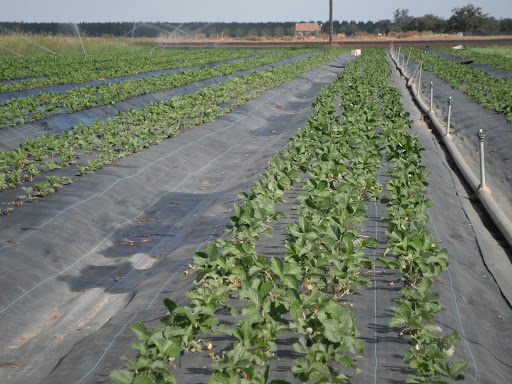
Our Strawberries today

We buy our strawberry crowns from Norcal Nursery in Red Bluff, they are not organic. Some of you will have read the article in The Bay Area New York Times and the Bay Citizen. There was one organic Nursery at Prather Ranch north of Mount Shasta. We plant the one year old crowns in August so that they have enough time to put down roots and are strong enough to produce a big crop in the spring. The Prather organic plants were not ready until late October which is too late for us. October plants would and do work for coastal growers as they have a long season with many who do not plant until January. Many organic growers along the coast should have used the organic plants. The fear of disease like the Prather plants had in their first year is very great, once you have that in your field it is very difficult to eradicate.

We need plants that are virus free, you can achieve this in three ways.

1. Location Location. Our organic potato seed is grown at 7,500 feet elevation in Colorado where there are no aphids to transmit the viruses. The same could happen with the Strawberry crowns. They would need to harvest them as late as possible in the season and freeze them until we needed them in August. They could not produce a crown in the same season as we plant.

2. Laboratory and Greenhouse. We were given some plants by UC Davis to evaluate several years ago. They were grown in a lab where they take the very tip from the growing point of the strawberry plant where there are no viruses. This tip is grow in a jar and once roots form is planted into soil in trays in the greenhouse. The Greenhouse must be sealed and have positive pressure meaning that if someone opens a door air rushes out and does not allow the aphids to enter. The cost of such a greenhouse is great. The plants worked out great but they arrived on the farm in late October so the were not able to grow big enough to produce a decent crop in the spring on our farm with the climate that we have.

3. Pesticides. Conventional plants are grown in soil that is fumigated and sprayed often to keep the aphids away. This is unacceptable but the sad truth.

So what can we do? Well firstly lets put things in perspective, once plants arrive on a farm such as ours they are grown organically. From the harvest of the crowns to the harvest of the first berries it is about 16 months. There are other examples such as our garlic seed which are also not organically grown. The seed is grown in the high Desert of California but the company does not offer organic seed even though we have asked. The answer is that the demand is not great enough. Some of the seeds we plant on the farm are not organic, they are untreated with chemicals. More and more seeds are being produced organically but still not all that we need. The chicks that will arrive on the farm this week come from chickens that are not organic. The demand is not great enough to produce organic chicks.

What can you do? Quite simply build demand by buying organic. The more strawberry crowns we order, seed we buy, chicks we need the bigger clout we will have with our suppliers. It is simple supply and demand. The laws controlling organic farmers can be changed, that may help but what we do not want is to reinforce many farmers opinion that farming organically involves too many regulations and is much too hard. They will not convert and the pesticides will still be used on all the conventional acres that could have been converted to organic.

I have been farming since 1983 when it was almost impossible to get seed that was not treated with chemicals. Over the past almost thirty years we have worked on all the low hanging fruit. It is a journey to a more sustainable future. This path is not easy. Some problems such as with the crowns are not so simple to solve. With your support we can start working on the fruit higher in the sustainable farming tree. The answer is, I believe, not to boycott organic berries. The more you support us with your dollars the more power we have to change and continue on our journey.

Please post any comments. Nigel

3 Comments to Strawberry Crowns and What We All Can Do

  1. by James Rickert

    On September 26, 2011 at 9:42 pm

    Hi Nigel,

    Thanks for talking about this. I’ve largely moved on, memories of my organic nursery are behind me… but with the recent NY Times article, it’s pretty fresh. A friend emailed me your notes and I feel like it is a good time to clear the air. Hope you don’t mind, from one organic farmer to another.

    I tried really hard to get my plants to “catch on” with organic growers. Unfortunately, it was like pounding against a brick wall. What you mention in your post is what limited me the most- “The fear of disease like the Prather plants had in their first year is very great, once you have that in your field it is very difficult to eradicate.”

    I grew plants in fields that have never been cultivated to any other crop than irrigated pasture for livestock. I had the most amazing fields once you tilled up the perennial grasses and clovers, it was packed full of life. We never did grow potatoes or onions in the fields, which typically can “dirty” a field with pathogens. Isolated conditions, pure mountain spring water for irrigation and some of the healthiest soil you’ve ever seen, I had the perfect equation.

    To respond to your quote, I never ever did sell diseased plants. I purchased white-tag plants that came out of a greenhouse and never had seen soil before, and were as clean as possible. The first time they hit soil, they were in my isolated fields. I sampled routinely throughout the growing season. Prior to harvest, Siskiyou County Ag Department would come inspect my fields with a fine-tooth comb (and a microscope). They really looked hard at my fields, as I was the only one who wasn’t fumigating and sterilizing the soil. They would sample, get results back, and find my field clean. Then I got the green light to go ahead and harvest. I used a trimming shed in Shasta County (Redding). At this point, Shasta County Ag Department took a crack at me as well… sending their inspectors into the trim sheds to look at my plants for disease. Once I passed their inspections, I was finally free to sell my stock. I cleared multiple hurdles to ensure that I sold 100% disease-free planting stock. Since I was the only organic nursery in the United States, I felt it was my responsibility to ensure that what I sold was the highest quality plant on the market. Plus the liability was huge- I would set myself up for lawsuits if I sold dirty stock. I always made sure everything I sold was of the cleanest nature possible… and I had the proof from sample results from myself, Siskiyou County and also Shasta County.

    Unfortunately, my plants never did catch on. I had a few dedicated growers who were willing to try my stock out, and they were hooked once they tried them. I really appreciate those growers, it is what kept me going while most organic growers shunned my plants.

    One of your neighbors, Robert Ramming, from Pacific Star Gardens in Woodland was one of those growers. If you know him, or know of him, he may be able to tell you a little about my plants, from a grower’s perspective. He is one of the growers who contacts me every year, begging me to grow again. I wish there were more like him out there, if there were, I’d be gearing up for a harvest of organic strawberry plants right now.

    My hat is off to you- you indicate you don’t sell any organic fruit off the plants for 16 months after you purchase stock. That is following the rules. Selling the next spring’s crop as conventional is something nobody else does, so I appreciate your integrity. Too bad there aren’t more growers like you.

    You are correct, in my climate I could only offer October plants. The earliest dig I ever did was October 8th, and I supplied valley growers (such as Pacific Star Gardens in Woodland) and also growers in far Southern CA and Florida. An August planting (that you do) would be from a low-elevation nursery, dug in the winter and stored all summer long in cold storage. I had the perfect spot identified for a low-elevation nursery with similar conditions (isolated, good water, and been in perennial pasture for livestock since about 1860) but I never did develop it. I was hoping that my nursery would be successful and unfortunately that never did happen. I saw how coastal berry growers viewed my plants and realized it was pointless, why spend a huge amount of money developing a low-elevation nursery when there wasn’t any demand?

    The regulations exist, they are just not being followed by organic growers and enforced by certifying agencies. If the certifiers truly did hold the growers to the rules, we would not be in this situation. Other nurseries would have sprouted up offering organic plants. With demand would come supply. If a cowboy such as myself can figure out how to grow organic strawberry plants, why can’t the world’s largest strawberry companies figure it out? I’m honestly not that smart… it is just simple economics. They can keep their costs low and prices for their organic fruit high.

    The painful truth is that the large berry corporations and the all-mighty dollar have won, and small organic farmers such as myself have lost. The large berry corporations have avoided using organic plants for a multitude of reasons, but bottom line… is the bottom line. To me, that just isn’t good enough. It’s sad.

    I hope you find my words sincere, and not offensive. I feel with this NY Times article about me, I should be able to have a voice too.

    If you have any questions, don’t hesitate to contact me. Thank you for providing a forum for me to explain for myself.

    James Rickert
    Prather Ranch
    rickertjames@yahoo.com
    530.941.0810 (direct)

  2. by Julie Cummins

    On October 4, 2011 at 3:04 pm

    This explanation from you, Nigel, and response from James Rickert, answer so many questions that the NYT article raised in my mind. I wondered things like, “What would it take for organic crowns to gain confidence among growers?” and “Is the right answer to increase regulation, or would it be better to focus on demand, and/or to support the development of a better pathogen-free-guaranteed system for organic stock?” It made me look at the bigger imperfections in the organic program. It made me think of the saying “The perfect is the enemy of the good.” Because, questions aside, I don’t think it helps anything to raise alarmist headlines about organic strawberries not being fully organic–as if the conventional ones were more honest? Obviously a complicated issue, and you two have given me so much food for thought. Thanks.

    Julie at CUESA

Trackbacks

  1. Organic Strawberries Not Really Organic | Strawberry Plants .org

Leave a Reply

You can use these tags: <a href="" title=""> <abbr title=""> <acronym title=""> <b> <blockquote cite=""> <cite> <code> <del datetime=""> <em> <i> <q cite=""> <strike> <strong>

By submitting a comment here you grant Eatwell Farm a perpetual license to reproduce your words and name/web site in attribution. Inappropriate or irrelevant comments will be removed at an admin's discretion.